
A summary of personal understanding and observations in recent years regarding the effect of pH value on nutrients (fertilizers) in planted tanks.
Note 1: This article is intended for aquarists who maintain long-term setups without frequent substrate changes or who do not use commercial aquasoil. If your standard solution to any tank issue is tearing down the setup and replacing the soil, you may stop reading here.
Note 2: I am not a professional chemist. My knowledge is limited to practical hobbyist experience. Corrections and further discussion are always welcome.
The Role of Aquasoil in pH Regulation
Aquasoil serves a buffering function that stabilizes pH for a certain period. The duration of this effect depends on source water quality, planting density, water change frequency, hardscape materials, and flow rate. It also varies significantly by brand, typically ranging from 6 to 12 months.
Generally, after 12 months, the influence of aquasoil on pH diminishes to a negligible level.
A key characteristic of quality aquasoil is its ability to "lower acidity" (reduce pH). It achieves this by releasing rich organic matter (organic acids), which neutralizes the slight alkalinity of tap water and shifts the environment to the weakly acidic range preferred by the majority of aquatic plant species.
Key Point A: In an alkaline environment, plant absorption of Potassium (K), Iron (Fe), Manganese (Mn), and Inorganic Nitrogen becomes weaker. Conversely, in an acidic environment, the absorption of these specific nutrients is enhanced.
(Note: I have not conducted in-depth research on the interaction of pH with other trace elements. As a hobbyist, the principle of "know enough to be effective" applies.)
Two-Stage Analysis of Nutrient Dynamics
Stage 1: Active Aquasoil (Strong Acid-Buffering Effect)
During this initial phase, the substrate is rich in both macro and micro elements. Beyond the dissolution of manually dosed inorganic fertilizers, the organic matter within the soil is continuously broken down by a balanced and active bacterial colony in the substrate. This decomposition provides a steady stream of nutrients for plant roots.
-
Maintenance Strategy: Focus primarily on regular water changes to prevent nutrient accumulation and algae blooms.
-
Result: Plants generally thrive without showing deficiency symptoms.
Stage 2: Exhausted Aquasoil (Loss of Buffering Capacity)
In this later stage, the aquasoil primarily functions as an inert anchor for roots. The accumulation of fish waste and organic detritus may still exert a slight acidifying effect due to bacterial nitrification, but this is not from the soil itself. As plant roots exhaust the remaining nutrient reserves, the overall buffering capacity collapses, and the water column begins to drift toward alkalinity.
Important Distinction Regarding CO₂:
The temporary pH drop caused by carbonic acid (from injected CO₂) does not replace the long-term buffering of organic acids from aquasoil. If you take a cup of CO₂-rich tank water and let it sit, the CO₂ will gas off, and the water will test alkaline. True organic acids released by soil remain stable in the water column.
Consequences of Alkaline Drift (Referring back to Key Point A):
In this alkaline state (whether soil is present or not), nutrient lockout occurs. Without precise manual fertilization, you will observe:
-
Old leaves melting or falling off.
-
Thin, weak stems (Potassium deficiency).
-
Pale new growth with prominent green veins (Iron/Manganese deficiency).
-
Yellowing old leaves and stunted new leaves (Nitrogen deficiency), especially if the fish load is light.
-
Weak root development (Phosphorus deficiency).
Neglecting water changes (only topping off evaporation) exacerbates this by concentrating alkaline minerals.
Mitigation Strategy:
-
Water Changes: Regular, disciplined water changes.
-
Fertilization: Manual dosing of micronutrient mixes and Monopotassium Phosphate (KH₂PO₄).
-
Feeding: Slightly increased feeding to introduce more Nitrogen and Phosphorus naturally.
-
Important: Because the water is alkaline, fertilizer uptake efficiency is significantly reduced. You will need to dose more fertilizer than you would in an acidic environment to achieve the same visible results.
Practical Methods for Correcting Alkaline Water
Here are two stable methods for adjusting pH in a mature tank:
Method 1: Substrate Amendment with Humic/Fulvic Acid
Manually adding humic acid (or other organic acids like fulvic acid) directly to the substrate.
-
Pros: Direct and effective.
-
Cons: Dosage requires trial and error based on plant response. Start small and increase gradually. There is no universal standard due to varying tap water parameters.
Method 2: Adding Driftwood to the Filter
Placing driftwood (or peat granules) inside the canister filter.
-
Pros: Safest and most stable method. It provides a slow, continuous release of humic substances without the need for daily/weekly dosing.
-
Cons: Tannins. This will tint the water yellow/brown. Exhausted aquasoil has poor water polishing ability, so tanks without active carbon or fresh soil will appear quite stained.
Note on Citric Acid: I have experimented with citric acid for pH adjustment. The effect is short-lived and unstable, causing parameter swings. It is also cumbersome to dose accurately. I do not recommend this method.
A Note on Commercial Fertilizers
An increasing number of small-batch liquid aquarium fertilizers now openly list Humic Acid as an ingredient. In contrast, agricultural water-soluble powders often lack this component because natural soil already contains humus. (Overuse of synthetic fertilizers in agriculture depletes soil humus, leading to compaction—hence the practice of returning straw to fields).
Fulvic Acid can be viewed as a fast-acting form of humic acid. It lowers pH and enhances nutrient uptake quickly but requires regular, consistent dosing. Slow-release humic sources (like soil or wood) offer more stability with less labor.
Final Thoughts
Whether the water is acidic or alkaline, many hardy aquatic plants will adapt. Alkalinity simply means reduced fertilizer efficiency. For the average hobbyist, the cost of adding a bit more fertilizer is negligible. This post simply explains the "why" behind the scenes.
Knowing the science and applying it are two different challenges.
Keep the plants that grow well, and learn how to grow the ones that don't. You can chase perfection for a season, but not forever—eventually, everyone gets tired. Unless you are forever young and enjoy the tinkering, then by all means, keep experimenting.
If all this is too much to remember? Just changing the aquasoil is still the easiest solution.
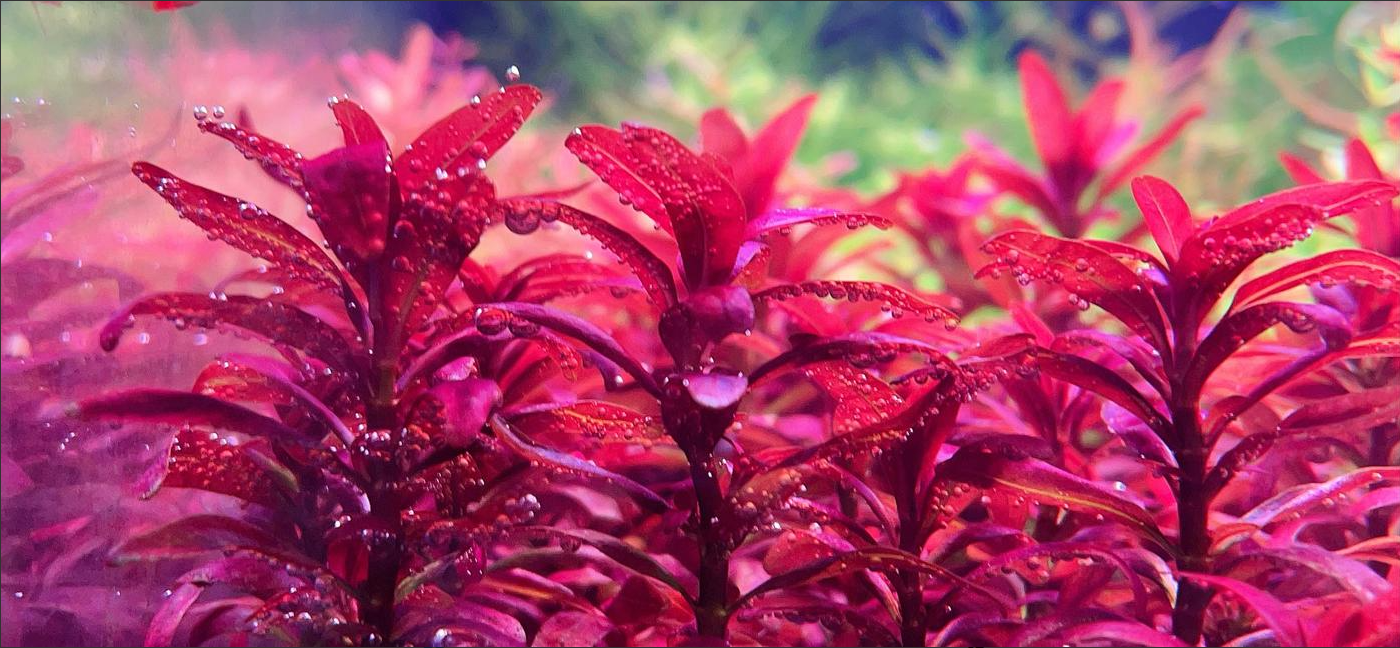
Image Caption: Ammannia sp. 'Sunset' previously cultivated in inert Turface (calcined clay). This colony was later lost during subsequent substrate experiments.